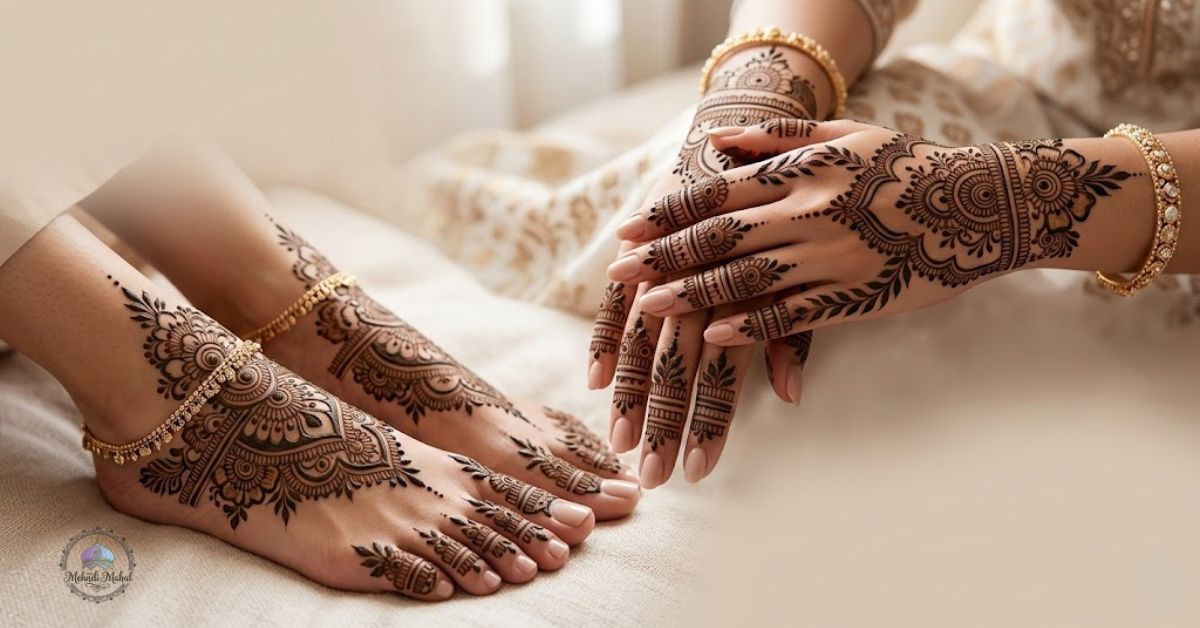
Mehndi has a magic that no jewelry can match. Across the USA, more brides, bridesmaids and wedding guests are falling in love with the ancient art of henna. From grand South Asian celebrations to intimate boho ceremonies, mehndi designs for hands and feet have become a universal symbol of beauty and joy. Whether you want heavy bridal mehndi designs that tell a love story or clean, delicate minimal mehndi designs that whisper elegance — there’s something here for every personality and every occasion.
This guide walks you through the most stunning, trending and timeless simple mehndi designs for wedding celebrations, so you step into your big day feeling absolutely radiant.
What is Mehndi and Why It’s So Special for Weddings?
Mehndi is more than just body art. It’s a centuries-old tradition rooted deeply in South Asian, Middle Eastern and North African cultures. The word “mehndi” comes from the Sanskrit word mendhikā, referring to the henna plant whose leaves produce that iconic reddish-brown dye. For thousands of years, women have used natural henna to decorate their skin during celebrations, festivals and most importantly — weddings. The mehndi ceremony is one of the most joyful pre-wedding ceremonies in Indian and Pakistani traditions. Families gather, music plays, and the bride sits regally as a skilled henna artist transforms her hands and feet into living artwork.
What makes mehndi truly special is the emotion it carries. In many cultures, the depth of the mehndi color on a bride’s hands symbolizes how deeply her future husband loves her. Darker stains mean a stronger bond — romantic, isn’t it? Beyond symbolism, mehndi creates a sense of sisterhood. Bridesmaids, aunts, cousins and wedding guests all participate together, laughing and sharing stories while their mehndi designs for hands and feet slowly dry. It’s a ritual, a memory and a masterpiece all at once.
The Cultural Significance of Mehndi in Modern Weddings
Mehndi is no longer exclusive to South Asian communities in the USA. Celebrities like Beyoncé and Gwen Stefani have proudly worn henna at events, sparking widespread curiosity. Boho weddings now frequently feature floral mehndi stations as a guest activity. The tradition has beautifully evolved into a cross-cultural celebration of art and love.
Types of Mehndi Designs (Arabic, Indian, Moroccan, Geometric)
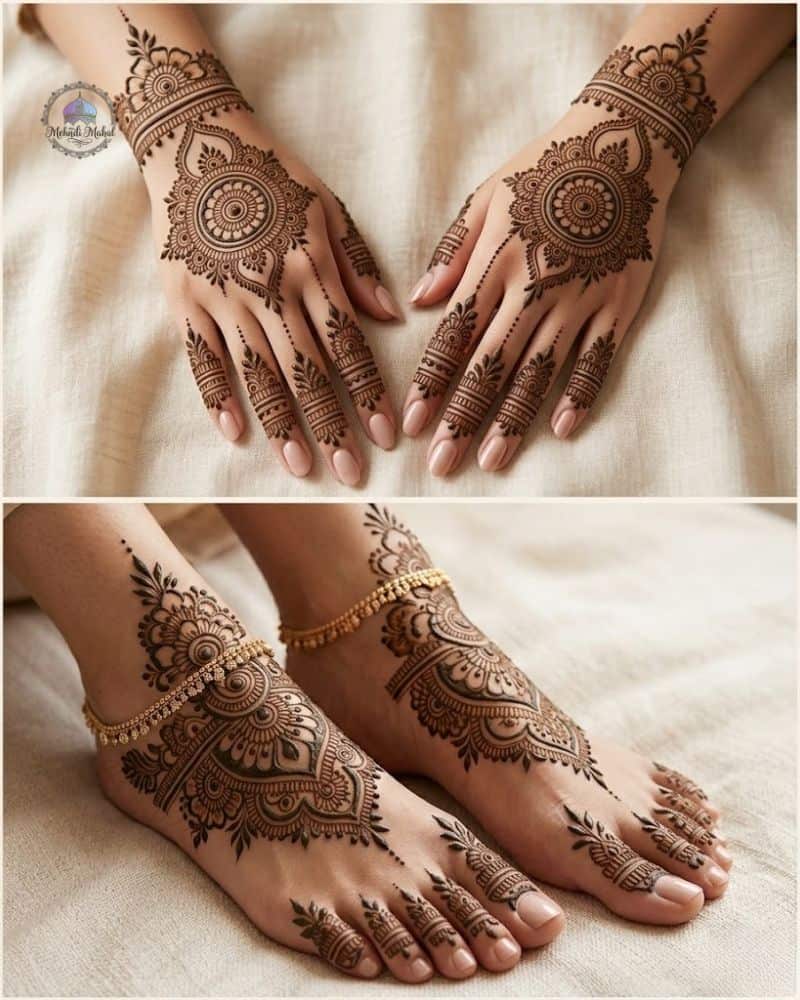
Walk into any mehndi ceremony and you’ll quickly notice that not all henna looks the same. There are four dominant styles that henna artists work with globally — and each one tells a completely different visual story. Arabic mehndi designs are bold and flowy, featuring large florals, sweeping vines and open negative space that lets the skin breathe between motifs. Indian designs are dense, detailed and deeply symbolic — they cover every inch of the hand with jaali patterns, peacocks, paisleys and intricate haath phool designs.
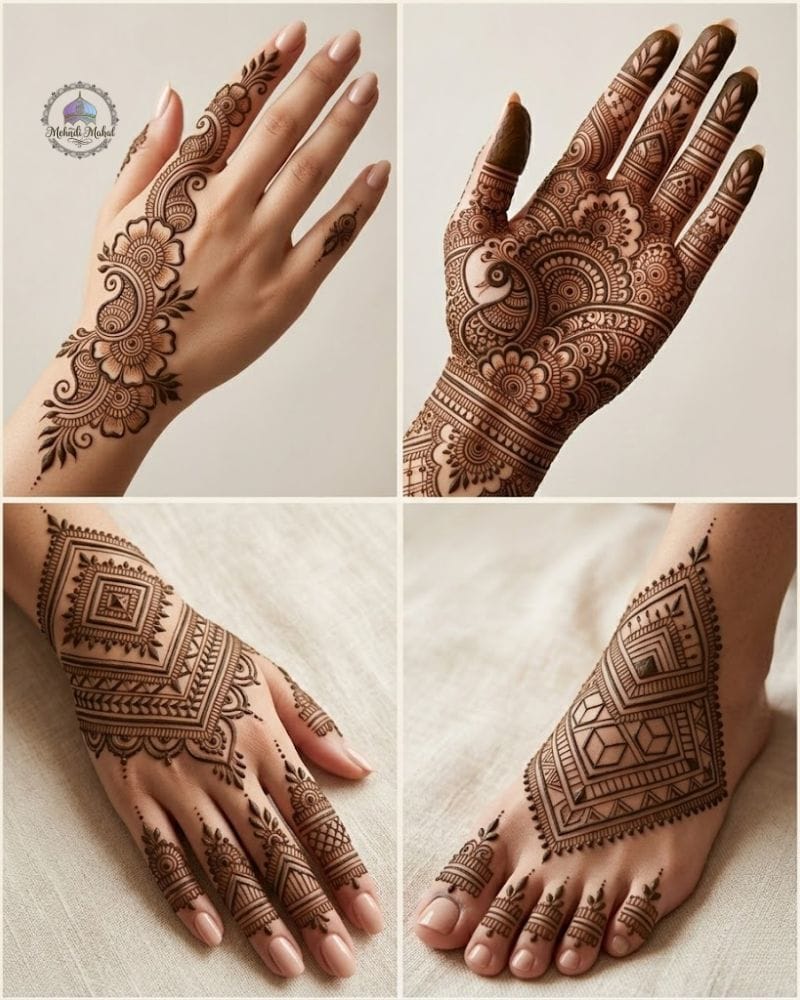
Choosing the right style matters more than most people realize. If you have a dainty hand with slim fingers, Arabic mehndi with its open spacing will elongate and flatter beautifully. If you love maximalism and want jaw-dropping bridal coverage, traditional Indian mehndi designs are your answer. For the minimalist bride who still wants something meaningful, geometric mehndi or a clean Moroccan-inspired pattern delivers sophistication without the overwhelm. Here’s a quick comparison to help you decide:
| Style | Coverage | Best For | Key Elements |
| Arabic | Medium | Wedding guests, bridesmaids | Vines, large florals, open space |
| Indian | Full | Brides, bridal ceremony | Jaali, peacock, paisley, haath phool |
| Moroccan | Minimal-Medium | Modern brides, boho weddings | Geometric shapes, lines, diamonds |
| Fusion/Contemporary | Varies | All occasions | Mix of all styles |
Which Mehndi Style is Best for You?
Your best style depends on your event, outfit and personality. Arabic suits western-fusion weddings perfectly. Indian mehndi shines at traditional bridal ceremonies. If you’re attending as a guest, a quick Moroccan or minimal mehndi design keeps things elegant without taking hours to apply.
Simple Mehndi Designs for Beginners
Starting your mehndi journey doesn’t have to feel intimidating. Easy mehndi designs for beginners are everywhere — and the good news is that even a handful of simple motifs can look absolutely stunning on your hands and feet. Begin with a single lotus flower on your palm. Add a few curved vines trailing up one or two fingers. Fill tiny gaps with small dots and circles. Suddenly, what started as “basic” looks deliberate and beautiful. The secret is confidence in your strokes. Slow, steady pressure on the henna cone creates clean, crisp lines that even professionals admire.
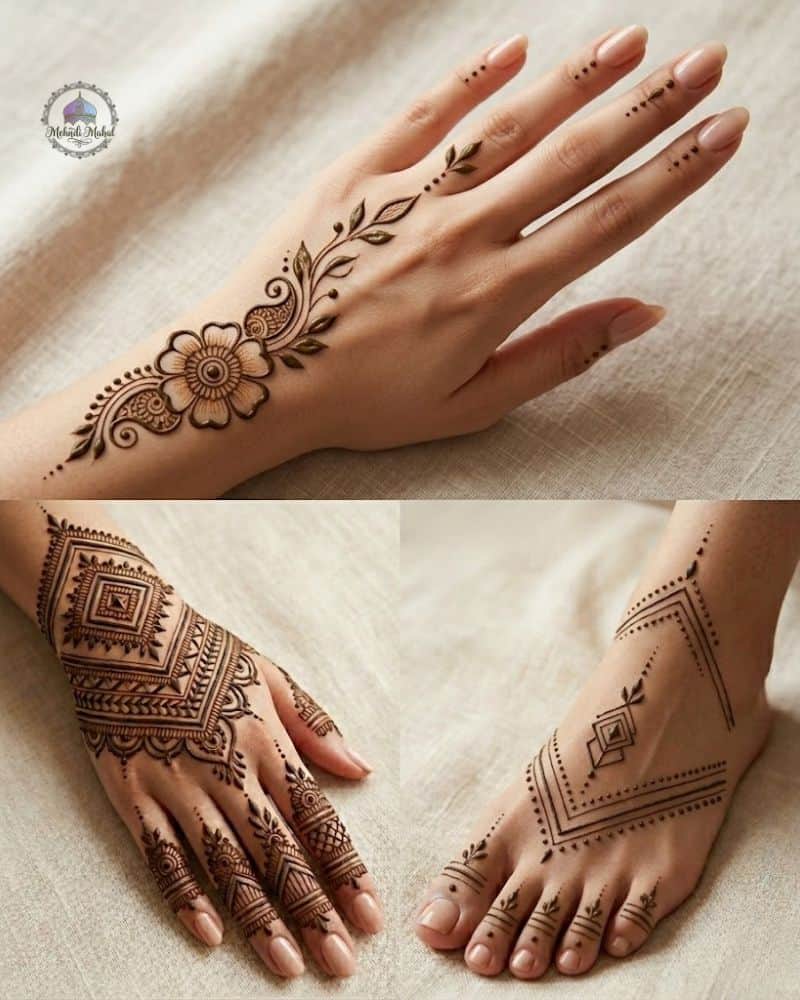
Beginners often make the mistake of attempting complex designs too soon and then feeling discouraged. Instead, start with what artists call “isolated motifs” — one flower here, one leaf cluster there, a crescent on the wrist. These basic mehndi designs work incredibly well for weddings, festivals and casual events. Practice on paper first to build muscle memory. Once your hands feel comfortable with the cone, move to skin. You’ll surprise yourself with how quickly it clicks.
Top 5 Easiest Mehndi Designs to Try at Home
These five beginner-friendly designs are quick, pretty and absolutely doable at home without professional training.
| Design | Time to Apply | Skill Level | Best For |
| Single Lotus on Palm | 5–8 mins | Beginner | Casual events |
| Wrist Band with Dots | 3–5 mins | Absolute Beginner | Festivals |
| Leaf Trail on Fingers | 8–10 mins | Beginner | Wedding guest |
| Crescent Moon Wrist | 5 mins | Absolute Beginner | Boho weddings |
| Small Floral Ankle Band | 10 mins | Beginner | Foot mehndi |
Best Mehndi Designs for Hands
Your hands are the canvas that everyone notices first. The best mehndi designs for hands balance beauty, proportion and personal style. Floral mehndi designs remain eternally popular — cascading roses, lotuses and jasmine motifs flow naturally along the curves of the hand. The back of palm is prime real estate for show-stopping centerpiece designs like a large mandala or a blooming peony surrounded by delicate leaves. Meanwhile, the wrist design serves as a natural frame, with bracelet-style patterns or trailing vine cuffs that tie the whole look together seamlessly.
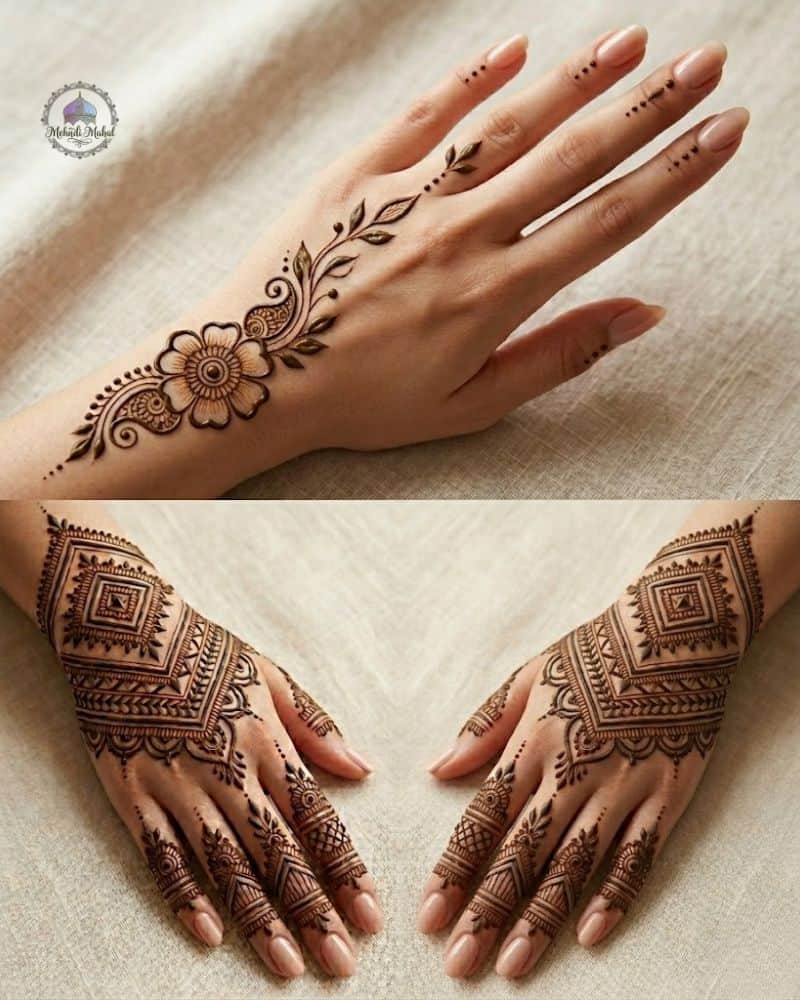
What’s trending in USA weddings right now? Boho-chic mehndi is dominating 2025 bridal seasons. Think dreamcatchers, feathers, geometric diamonds and wildflower clusters — all rendered in fine-line henna that looks almost like a tattoo. Haath phool designs are also making a major comeback, with delicate chains connecting wrist cuffs to finger rings in an elegant faux-jewelry effect. Whatever style you choose, always consider your hand shape. Broader palms look stunning with bold centerpiece designs. Slender hands shine with trailing finger mehndi and minimal wrist work.
Front vs Back Hand Mehndi — What Looks Better?
Both have their magic. Back of palm designs photograph beautifully and show off intricate detailing. Palm designs feel more personal and spiritual — many brides hide meaningful symbols there. For weddings, combining both creates the most complete and photogenic look overall.
Bridal Mehndi Designs for Full Hands
A bride’s mehndi is in a league of its own. Bridal mehndi designs for full hands are complex, deeply personal and hours in the making. Traditional Indian bridal mehndi designs cover every surface — front and back of both hands, all fingers and often extend up to the elbows. Within this intricate tapestry, a skilled henna artist weaves in meaningful symbols: the groom’s face hidden within a lotus, the couple’s initials tucked inside a paisley, tiny bride-and-groom figures nestled in the center of the palm. It’s storytelling through art. Every motif carries intention.
American brides of South Asian heritage are now blending cultural styles in breathtaking ways. A bride might choose a dense Indian mehndi design on one hand and a flowing Arabic mehndi style on the other — creating a beautiful east-meets-west aesthetic that reflects her dual identity. Non-South Asian brides are also embracing full-hand henna with botanical themes, celestial motifs and fine-line floral patterns inspired by Pinterest boards and Instagram artists. The bridal ceremony mehndi experience has genuinely become a universal bridal ritual worth celebrating.
How to Prepare Your Hands Before Bridal Mehndi Application
Preparation makes a significant difference in your final mehndi color result. Exfoliate your hands gently two days before application. Avoid applying moisturizer or lotion on the day of your session — oils create a barrier that prevents natural henna from staining deeply. The drier your skin, the darker and more long-lasting your stain will be.
Minimalist Mehndi Designs for Modern Brides
Minimalism has officially taken over the bridal world — and mehndi designs for hands and feet are no exception. Minimal mehndi designs are clean, intentional and effortlessly chic. A single delicate rose on the wrist. A thin geometric band across two fingers. A tiny mandala on the center of the palm with nothing else around it. These designs carry enormous visual impact precisely because of what they leave out. Negative space becomes part of the design itself, making each motif feel sculptural and deliberate.
Minimal mehndi designs for modern brides work especially well for non-traditional wedding settings — rooftop ceremonies, garden parties, courthouse weddings and intimate elopements. They pair beautifully with modern bridal fashion: sleek slip dresses, tailored jumpsuits and contemporary lehengas with clean lines. Many minimalist brides in the USA are choosing single-line henna art inspired by fine-line tattoo aesthetics. It’s delicate. It’s modern. And it photographs like a dream on every skin tone.
Minimalist Mehndi Inspo for the Non-Traditional Bride
Single-element designs are your best friend. Try a lone lotus on your palm, a crescent moon on your wrist or a tiny constellation across three fingers. These simple mehndi designs for wedding celebrations feel personal without being overwhelming — perfect for the bride who marches to her own beat.
Mehndi Designs for Feet (Front and Back)
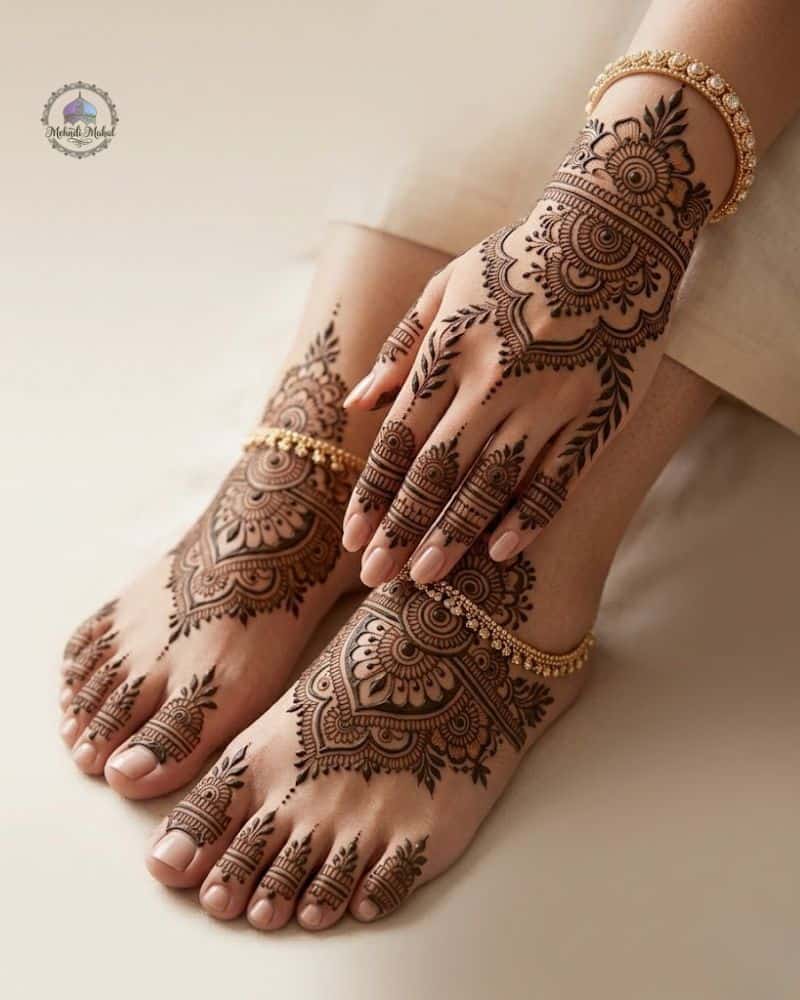
Feet deserve just as much love as hands. Beautiful mehndi designs for hands and feet always treat the feet as a complementary canvas — not an afterthought. Feet mehndi designs on the front of the foot typically feature a central focal motif (a lotus, mandala or paisley) at the top, with vines and florals trailing down each toe. This style looks breathtaking with open-toe heels, barefoot sandals or traditional Indian footwear like juttis and kolhapuris.
Back-of-foot and heel designs are gaining serious momentum in USA bridal photography. A beautifully designed heel shows up in wedding photos more than most brides anticipate — especially in shots where the bride is seated or leaning. Intricate payal designs traced along the heel and ankle create the illusion of delicate jewelry. Some brides even extend the mehndi up the calf for a truly dramatic editorial look that social media absolutely loves.
How to Choose the Right Foot Mehndi Design for Your Outfit
Match your foot mehndi to your outfit’s vibe. Heavy lehenga embroidery pairs well with dense Indian mehndi designs on feet. A flowy boho dress calls for simple foot mehndi with wildflower motifs. A sleek modern gown looks best alongside minimal mehndi designs on just the toes or ankle.
Foot Mehndi Designs for Bridesmaids and Wedding Guests
Not everyone at a mehndi ceremony wants or needs heavy coverage. Simple mehndi designs for bridesmaids strike the perfect balance — they look polished and festive without stealing focus from the bride. Ankle band designs are a universally flattering choice. A single floral chain wrapping around the ankle takes under fifteen minutes and looks genuinely beautiful. Single toe mehndi design florals — one small bloom on the big toe — add a sweet, understated touch that pairs with any outfit.
Basic mehndi designs for wedding guests should prioritize speed and elegance. A simple foot mehndi design with a vine along the side of the foot, three small flowers across the toes and a dot-work ankle cuff can be completed in 15–20 minutes. It’s enough to feel festive and connected to the celebration without requiring a long commitment. Many wedding guests in the USA appreciate having a quick, beautiful option that doesn’t interfere with their plans for the rest of the day.
Matching Mehndi Ideas for the Entire Bridal Party
Coordination is everything. Give each bridesmaid the same ankle band base design but let them personalize one element — a flower, a name initial or a small symbol. It creates a cohesive look while celebrating individual personalities. Brides love this idea and it photographs beautifully as a group.
Anklet Style Mehndi Designs for Feet
Anklet mehndi — also known as payal design henna — is one of the most requested styles at USA mehndi ceremonies right now. These designs mimic the look of real ankle jewelry with stunning accuracy. Imagine a delicate chain of tiny florals looping around your ankle, punctuated by bead-like dots and leaf clusters. It looks like you’re wearing jewelry — except it’s art drawn directly onto your skin. The effect is both elegant and deeply romantic.
What makes ankle mehndi so universally beloved is its versatility. It works for brides, bridesmaids, wedding guests and even partygoers at festivals and Eid celebrations. The design sits beautifully beneath the hem of a lehenga, saree or maxi dress — peeking out just enough to create a tantalizing glimpse of artistry. At beach weddings and boho ceremonies, barefoot brides with payal mehndi designs look absolutely ethereal against sand and candlelight backgrounds.
DIY Anklet Mehndi — Step by Step Guide
Start at the inner ankle bone. Draw a thin curved line around the ankle as your base. Add small teardrop florals evenly spaced along the line. Connect them with tiny dots. Finish with a small circular focal motif at the center front of the ankle. Let dry for 30 minutes. The result? Gorgeous DIY anklet mehndi that looks professional.
Finger and Toe Mehndi Designs
Finger mehndi designs are having their biggest moment yet. From knuckle-to-tip geometric bands to full-finger floral mehndi, these micro-designs pack enormous visual punch. They’re perfect for brides who want striking detail without full-hand coverage. A single rose on the index finger. A criss-cross lattice over the middle finger. Tiny dots and dashes along the pinky. Together, these elements create a cohesive, editorial look that photographs beautifully in close-up shots — which every wedding photographer absolutely loves.
Toe mehndi design art is equally compelling. Ring-toe floral mehndi, nail-tip henna fades and individual toe band designs create the impression of natural jewelry without any metal. Finger mehndi designs for weddings and toe designs work in perfect harmony when your hands and feet share the same design language. Match your finger motifs to your toe motifs — both featuring leaves, say, or both featuring geometric bands — for a cohesive, intentional look from tip to toe.
Trending Finger Mehndi Designs in 2025
The biggest finger mehndi trends this year include geometric knuckle bands, single rose fingertip designs and criss-cross lattice patterns across two or three fingers. Fine-line henna inspired by tattoo aesthetics is also enormous right now — delicate, precise and completely modern.
How to Make Mehndi Color Darker and Last Longer
Everyone wants that deep, rich dark maroon stain that looks almost like a professional dye job. Achieving it isn’t magic — it’s method. The single most important step is leaving your henna cone paste on as long as possible. Six to eight hours is ideal. Overnight is even better. The longer the paste stays on, the deeper the mehndi color penetrates the skin. After scraping off the dried paste, avoid water contact for at least 24 hours. Water stops the oxidation process that deepens the stain from an initial orange stain to that coveted dark maroon.
Natural boosters make a real difference too. Before application, warm your skin slightly — heat opens pores and helps henna penetrate deeper. After removal, apply a thin coat of Vicks and mustard oil mixture to the design. This traditional technique accelerates color development beautifully. Some artists also use clove smoke — holding the dried mehndi over smoldering cloves — which darkens the stain dramatically within minutes. One critical warning though: never use black henna. Black henna contains PPD (para-phenylenediamine), a chemical that can cause severe skin reactions, chemical burns and permanent scarring. Always insist on natural henna only.
Common Mistakes That Ruin Your Mehndi Color
Washing too early is the number one mistake. Second is applying lotion before your session — it creates an oil barrier. Third is using cheap, low-quality henna cones that contain minimal actual henna. Always buy quality. Your skin tone also affects results — darker skin tones tend to show mehndi color most vividly.
How Long Does Mehndi Take to Apply?
Mehndi application time varies dramatically based on design complexity. A tiny wrist design takes five to ten minutes. A moderate simple mehndi design for wedding guests covers both hands in about 30–45 minutes. But full bridal mehndi designs for hands and feet — covering both hands from fingers to elbow and both feet from toes to mid-calf — can take anywhere from four to eight hours with a skilled henna artist. Plan your bridal ceremony mehndi day very carefully. Don’t schedule anything else.
Drying time is a separate consideration. Fresh mehndi paste takes 15–30 minutes to dry to the touch, depending on how thickly it was applied. However, the paste should ideally stay on for 6–8 hours minimum for the best color result. Many brides apply their mehndi the night before the wedding, sleep with it wrapped in tissue paper and wake up to a gorgeous, fully developed stain. Scheduling mehndi two days before your wedding is actually ideal — the stain peaks in color on day two and three after application.
Mehndi Day Timeline — How to Plan It Perfectly
| Time | Activity |
| Morning | Exfoliate hands and feet, skip moisturizer |
| Mid-Morning | Henna artist arrives, begins bridal mehndi |
| Afternoon | Hands completed, begin feet mehndi |
| Evening | Paste removal, apply Vicks and mustard oil |
| Next Morning | Deep color achieved, wedding-ready! |
How Much Does a Henna Artist Charge?
Henna artist charges in the USA vary widely based on location, experience and design complexity. For a simple basic mehndi design on both hands, expect to pay between $20 and $50. A moderate design covering hands and feet for a bridesmaid typically runs $75–$150. Full bridal mehndi designs for hands and feet — the works, both hands to elbows and both feet to calves — can cost anywhere from $150 to $500 or more depending on the artist’s reputation and your location.
Bridal mehendi cost in major cities like New York, Los Angeles, Chicago and Houston tends to run higher than in smaller markets. Many top henna artists charge a travel fee on top of their design rate. Some require a non-refundable deposit to secure your date — which is completely reasonable during busy wedding season. Always book your bridal henna artist at least three to six months in advance. The best artists fill up fast, especially between May and October.
How to Find and Book a Good Henna Artist in the USA
Check Instagram and Pinterest portfolios thoroughly before reaching out. Look for consistent line quality, clean edges and good reviews. Always request a patch test before your wedding if you have sensitive skin — especially important if you’ve never had natural henna applied before. Ask specifically whether they use natural henna or chemical additives. A reputable artist will answer this question without hesitation.
Mehndi Design Tips for Kids and Teenagers
Kids are absolutely enchanted by mehndi — and honestly, who can blame them? Simple stars, butterflies, cartoon characters, tiny hearts and animal paw prints make perfect basic mehndi designs for children at family weddings and festivals. The most important rule is non-negotiable: only ever use natural henna on children. Black henna contains PPD, a chemical that causes severe allergic reactions and can be especially dangerous on young, sensitive skin. No exceptions. No shortcuts. Natural only.
For teenagers, mehndi is genuinely trendy right now. Finger mehndi designs for weddings are hugely popular with teen bridesmaids who want something cool and photogenic without full-hand coverage. Small wrist designs, floral mehndi ankle bands and geometric finger rings are all massive hits with the teenage crowd. These designs apply quickly — usually under 20 minutes — which is perfect for kids who can’t sit still for long sessions. Teen-friendly minimal mehndi designs at family weddings create beautiful memories that young people genuinely treasure.
Is Mehndi Safe for Kids? What Parents Need to Know
Natural henna is generally safe for children over five years old. Always do a small patch test 24 hours before full application. Watch for redness, itching or swelling. If any reaction occurs, remove immediately with olive oil. Never use black henna on children under any circumstances — the risks are serious and well-documented by dermatologists across the USA.
FAQs About Mehndi Designs
How Long Does Mehndi Last on Skin?
Natural henna typically lasts one to three weeks on the skin. The mehndi color fades gradually as your skin naturally exfoliates. Areas with thicker skin — like palms and soles of feet — tend to hold color longer than the back of palm or wrists. Proper aftercare, including avoiding harsh soaps and excessive water exposure, significantly extends the life of your design.
What is the Difference Between Black and Red Henna Cone?
The red or brown henna cone contains pure natural henna paste — safe, traditional and completely skin-friendly. The black henna cone contains chemical additives, most commonly PPD, which produces a darker stain but carries serious health risks including chemical burns and allergic reactions. Always choose the red or brown natural cone. Your skin will thank you for it.
Can Mehndi Be Applied on Body Parts Other Than Hands and Feet?
Absolutely yes. Shoulders, upper arms, the back, collarbone, neck and even the ribcage are popular placement choices for henna art, especially at bohemian and fusion weddings. Floral mehndi trailing up the forearm or a geometric mandala on the shoulder blade looks stunning and increasingly popular among USA brides exploring non-traditional body art.
Are There Specific Mehndi Designs for Cultural Celebrations?
Every culture has its own mehndi vocabulary. Indian mehndi designs for Diwali and Karva Chauth feature traditional peacock and lotus motifs. Eid celebrations favor flowing Arabic mehndi with bold florals and geometric accents. South Asian weddings incorporate deeply symbolic bridal mehndi designs with hidden love stories within the patterns. Every celebration has its own visual language — and mehndi speaks them all fluently.
link:30 Basic Mehndi Designs for Hands and Feet for Bridesmaids & Wedding Guests
Conclusion
Mehndi designs for hands and feet are timeless, deeply personal and endlessly versatile. Whether you’re a bride seeking a full bridal masterpiece, a bridesmaid wanting something quick and beautiful or a curious beginner trying DIY henna for the first time — there’s a perfect design waiting for you. Henna art connects cultures, celebrates love and turns human skin into something genuinely breathtaking. Save this guide, share it with your bridal party and let the mehndi magic begin. Your most beautiful wedding memory might just start at the tip of a henna cone.