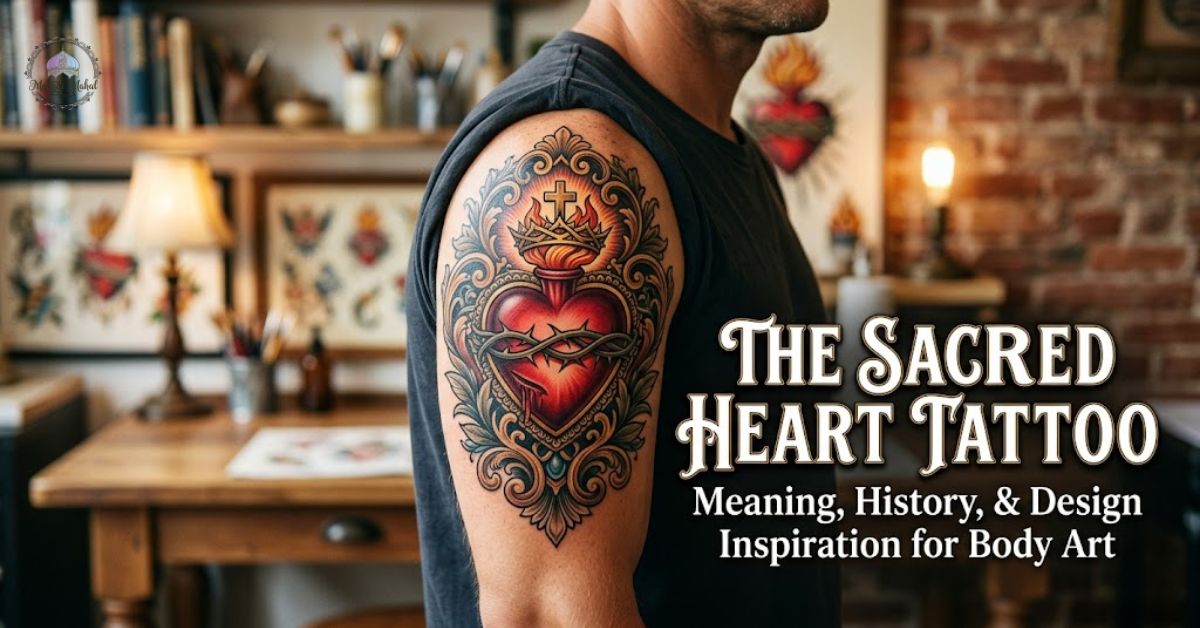
Few tattoo designs carry the raw emotional power of a sacred heart tattoo. This symbol bleeds, burns, and endures across centuries of religious art tattoo history — moving from chapel walls straight onto human skin without losing a single drop of its meaning. Rooted deeply in Catholic iconography and Christian faith, the sacred heart represents divine love, sacrifice, and spiritual triumph all wrapped into one breathtaking image.
Whether you’re a devoted Catholic seeking a meaningful religious tattoo design, or simply someone drawn to the fierce beauty of a flaming heart tattoo, this design speaks a universal language that transcends religion, culture, and time entirely. It’s personal. It’s powerful. It’s permanent.
What Is a Sacred Heart Tattoo? A Beginner’s Overview
A sacred heart tattoo shows a burning heart wrapped in a crown of thorns, pierced by a lance, and glowing with divine light. It’s one of the most recognized Catholic religious symbols in the world. You’ve seen it on church candles, prayer cards, and stained glass windows. Now it lives on skin — and it looks absolutely stunning there.
This isn’t just a pretty heart with some flames. Every element tells a story rooted in Christian faith and centuries of religious devotion. The design speaks to love, suffering, and spiritual triumph all at once. If you want a tattoo that actually means something deep, the sacred heart tattoo delivers on every level.
The Deep Significance of Sacred Heart Tattoos
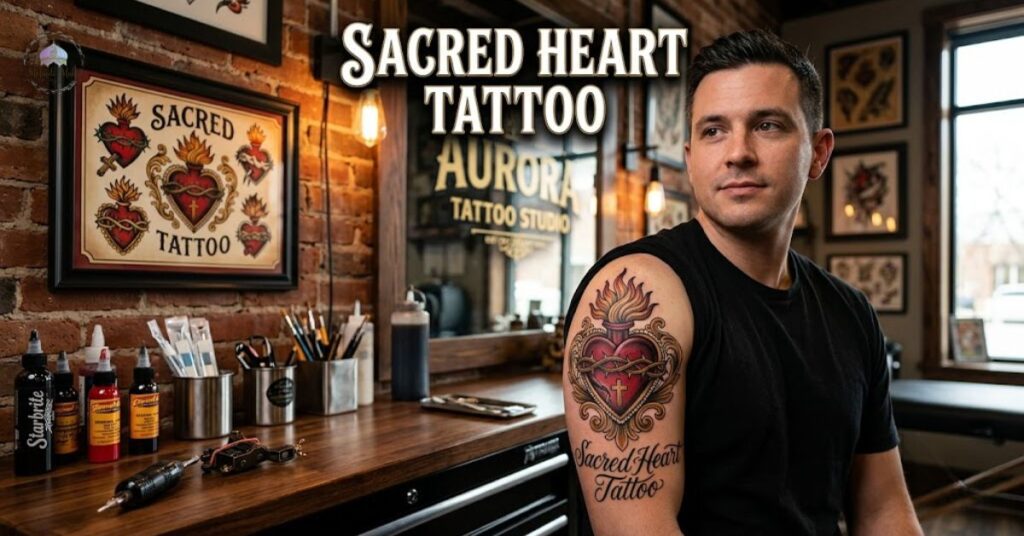
Understanding sacred heart meaning changes how you see the design entirely. Nothing in this symbol is decorative for decoration’s sake. The flames, the thorns, the bleeding wound — every detail carries layered sacred symbolism that artists and wearers have honored for generations. This is spiritual art with real theological roots.
The sacred heart symbolism connects directly to Jesus Christ and his love for humanity. It represents divine love at its most raw and unconditional. For millions of people, wearing this image is an act of faith. For others, it’s a personal declaration of endurance, passion, and resilience. Either way, this tattoo speaks a language that needs no translation.
The Flames: Symbol of Divine Love
The flames shooting up from the heart aren’t just visual drama. They represent divine love — passionate, eternal, and completely unconquerable. Fire doesn’t whisper. It announces. In Catholic iconography, these flames signal that Christ’s love burns without condition, without end, and without compromise for all of humanity across all of time.
The Crown of Thorns: Endurance and Sacrifice
The crown of thorns tattoo element wrapped around the sacred heart points directly to the crucifixion of Jesus Christ. It symbolizes suffering carried with grace. For many wearers, this element represents personal hardship — pain transformed into something meaningful. It’s a reminder that endurance has its own kind of quiet, unbreakable beauty.
The Cross on Top: Faith and Triumph
The small cross sitting at the top of the heart carries enormous meaning in a compact form. It signals victory over death and suffering. Christian faith and triumph are stitched into this single element. It anchors the entire composition with theological purpose. Without it, the design loses its declaration of hope rising above pain.
History of the Sacred Heart Symbol — From Medieval Art to Modern Ink
The sacred heart tattoo history and significance stretches back to 12th-century medieval mysticism. Saints like Bernard of Clairvaux and Gertrude the Great spent their lives meditating on Christ’s wounded heart. However, it was Margaret Mary Alacoque, a French nun living in the 17th century, who changed everything. She reported receiving visions of Jesus Christ himself and dedicated her life to spreading Margaret Mary Alacoque sacred heart devotion across Europe.
The sacred heart of Jesus entered formal visual art in 1760 when painter Pompeo Batoni created his iconic “Sacred Heart of Jesus” for the Chapel of the Gesù in Rome. The painting showed a luminous Jesus Christ holding a glowing sacred heart in his hands. Shortly after, artists like Corrado Giaquinto, Miguel Cabrera, and Jose de Paez began incorporating the sacred heart into their own works. By the 20th century, the image had migrated from chapel walls into tattoo studios — and the sacred heart renaissance happening right now proves it never lost its appeal.
“The sacred heart is perhaps the most complete symbol of Christian love ever created — it holds suffering and joy in the same image.” — Catholic Art Scholar
| Era | Key Development |
| 12th Century | Medieval mystics begin meditating on Christ’s wounded heart |
| 17th Century | Margaret Mary Alacoque formalizes sacred heart devotion |
| 1760 | Pompeo Batoni paints Sacred Heart of Jesus in Rome |
| 19th Century | Catholic Church officially endorses the devotion |
| 20th Century | Sacred heart enters tattoo culture in America |
| 2020s | Sacred heart tattoo renaissance explodes globally |
Bridging Classical Art and Modern Tattooing
Fine art and tattoo culture share more DNA than most people realize. The sacred heart depicted in religious art traveled from Renaissance oil paintings directly onto skin — carrying its compositional integrity completely intact. Pompeo Batoni sacred heart paintings gave tattoo artists a masterclass in symbolic visual language. That influence still shapes how artists draw this design today, centuries later.
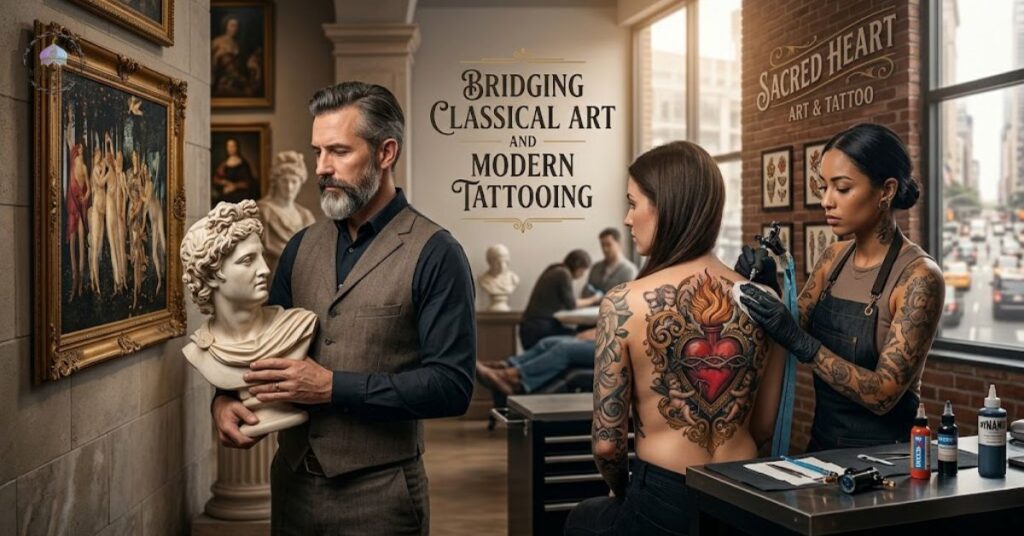
Modern tattoo artists reimagine the sacred heart of Jesus through their own creative lens. Some stay faithful to the baroque original. Others strip it down to stark geometry or featherweight fine lines. The dialogue between classical iconography and modern tattooing produces some of the most compelling religious art tattoo work in contemporary body art. Jesuit Church tattoo art aesthetics — ornate, layered, deeply symbolic — echo through every well-executed sacred heart piece done today.
Top Sacred Heart Tattoo Design Styles to Consider
Choosing your style matters as much as choosing the design itself. The sacred heart tattoo adapts remarkably well across nearly every tattooing tradition. Bold or delicate, minimal or maximalist — there’s a version of this design that fits your aesthetic perfectly. The key is knowing what each style offers before you sit in the chair.
Here’s a clear breakdown of the most popular styles and what makes each one work. Study these carefully. Talk to your artist about which approach fits your vision, your body placement, and your long-term goals for how the piece should age on your skin.
| Style | Best For | Color or B&G | Longevity |
| Traditional | Bold, classic look | Color | Excellent |
| Fine Line | Subtle, delicate feel | B&G or minimal color | Good |
| Blackwork | Dark, dramatic impact | Black only | Excellent |
| Geometric | Modern spiritual vibe | B&G or color | Excellent |
| Hyperrealism | Maximum visual impact | Both | Depends on artist |
| Neo Traditional | Rich detail and color | Color | Very Good |
Traditional (Old School) Sacred Heart Tattoos
Traditional tattoo designs use bold black outlines, a limited color palette, and flat shading. These are the hallmarks of American traditional tattoo culture developed in the early 20th century. Red, yellow, and black dominate a traditional sacred heart tattoo. The result is graphic, punchy, and built to last for decades without fading into a muddy mess on your skin.
Fine Line and Minimalist Sacred Heart Tattoos
Fine line tattoo work strips the sacred heart down to its most elegant bones. Delicate linework replaces bold outlines entirely. The result feels intimate rather than declarative — perfect for wrist, collarbone, or behind-the-ear placement. If you want something quiet and deeply personal, a fine line sacred heart tattoo whispers what other styles shout.
Blackwork and Etching Style Sacred Heart Tattoos
Blackwork transforms the sacred heart symbolism into something dramatic and architectural. Etching-style techniques mimic old woodblock prints and copper engravings, giving the design a vintage, almost gothic gravitas. This style suits people who want serious visual impact without committing to color. The contrast is severe. The result is unforgettable on skin.
Geometric and Sacred Geometry Variations
Geometric sacred heart tattoos fuse Catholic religious symbols with mathematical precision. Mandalas, hexagons, and dotwork halos surround the heart in perfect symmetry. This style bridges Eastern and Western spiritual art traditions in one cohesive composition. It appeals strongly to people who connect with sacred symbolism but prefer a more modern, abstract visual language on their skin.
Hyperrealism Sacred Heart Tattoos
Hyperrealism takes the sacred heart tattoo somewhere truly extraordinary. Skilled artists render every vein, every drop of blood, every tongue of flame with photographic accuracy. This style demands elite technical skill and significant time in the chair. But the finished result — a bleeding heart tattoo that looks three-dimensional on your skin — is absolutely jaw-dropping and emotionally visceral.
Sacred Heart Tattoo Designs for Men and Women
The sacred heart tattoo for men and women works differently depending on scale, style, and placement. It’s one of the most versatile religious tattoo designs in all of tattooing. Bold and fierce or soft and intimate — the energy of this design shifts completely based on how your artist approaches it. There truly is no wrong interpretation here.

Both men and women have claimed this symbol for deeply personal reasons. Some want the raw power of a flaming heart tattoo with thick traditional outlines. Others want something quieter and more intimate rendered in hairline strokes. The sacred heart tattoo holds space for every kind of person and every kind of story without contradiction.
Bold and Masculine Sacred Heart Tattoo Ideas for Men
Men gravitate toward traditional tattoo designs or blackwork sacred heart pieces with strong linework and saturated color. Chest, sleeve, and forearm placements amplify the visual authority of the design. Pairing the sacred heart tattoo with daggers, banners, praying hands tattoo elements, or roses creates a classic American traditional composition with real visual storytelling power.
Delicate and Feminine Sacred Heart Tattoo Ideas for Women
Women frequently choose fine line tattoo or neo traditional tattoo interpretations — softer shading, floral additions, and more intimate scales. Collarbone, ribcage, and inner arm placements suit this approach beautifully. A Virgin Mary tattoo paired alongside a sacred heart creates a stunning devotional composition that feels both powerful and deeply tender at the same time.
Best Placement Ideas for Your Sacred Heart Tattoo
Placement shapes how a tattoo breathes on your body. A sacred heart tattoo placed directly on the chest sits closest to your actual heart — symbolically intentional and visually powerful. The forearm makes it visible and conversational. The back offers a canvas large enough for elaborate, detailed compositions that fully honor the design’s complexity and sacred symbolism.
| Placement | Best Style | Pain Level | Visibility |
| Chest | Traditional, Realism | Medium | Private/Meaningful |
| Forearm | Fine Line, Traditional | Low | High |
| Upper Arm | Blackwork, Neo-trad | Low | Medium |
| Back | Large scale, Realism | Medium | Low |
| Hand/Finger | Minimalist | High | High |
| Ribcage | Fine Line | High | Private |
| Collarbone | Fine Line | Medium-High | Medium |
| Thigh | Any style | Low-Medium | Private |
Always discuss placement with your artist before deciding. They understand how designs scale and how different body areas affect the way a tattoo ages over time. Their experience is genuinely invaluable in making this decision correctly.
Sacred Heart Tattoo Combinations — Symbols That Pair Perfectly
Pairing symbols amplifies meaning. A sacred heart tattoo combined with complementary imagery creates a richer visual narrative on your skin. Think of it as building a personal mythology — each added element deepens and expands the story you’re telling through your body art. The most powerful combinations feel natural and intentional rather than forced.
Popular Sacred Heart Tattoo Combinations:
| Pairing | Meaning |
| Sacred Heart + Virgin Mary | Ultimate Catholic devotional pairing |
| Sacred Heart + Roses | Love, beauty, and sacrifice intertwined |
| Sacred Heart + Dagger | Emotional pain cutting through love |
| Sacred Heart + Angel Wings | Divine protection and spiritual freedom |
| Sacred Heart + Praying Hands | Deep faith and religious devotion |
| Sacred Heart + Cross tattoo | Doubled spiritual meaning and faith |
| Sacred Heart + Banner | Space for a name, date, or phrase |
| Sacred Heart + Snake | Temptation, duality, spiritual struggle |
A cross tattoo element paired with the sacred heart doubles the theological weight of the composition. A Virgin Mary tattoo placed above creates a complete devotional scene that references centuries of Catholic iconography in a single, unified design. Talk to your artist about how these elements can flow together organically rather than feeling like separate pieces crowded together.
Color vs. Black and Grey — Which Sacred Heart Tattoo Style Is Right for You?
Color sacred heart tattoos explode with visual energy. Vibrant reds, golds, and yellows mirror the original religious art tattoo paintings created by Pompeo Batoni and his contemporaries. Color ages differently on different skin tones, so always discuss longevity with your artist. A stunning heart with flames tattoo in full color requires proper aftercare and occasional touch-ups to stay vivid and sharp over years.
Black and grey carries its own quiet authority that color simply can’t replicate. Greywash techniques create stunning depth and dimension without a single drop of color. It photographs beautifully and ages more predictably across most skin types and tones. If timeless elegance matters more to you than visual drama, black and grey is almost always the smarter long-term choice for a detailed sacred heart tattoo.
Show Your Ink: How Custom Style Defines Your Sacred Heart Tattoo
Your sacred heart tattoo doesn’t have to follow anyone else’s template. The most memorable pieces emerge when clients bring genuine personal context — a parent’s name, a sobriety anniversary, a scripture verse — and skilled artists build the design around that story organically. Custom work elevates this popular Catholic tattoo design from religious icon into a personal artifact.
Talk to your artist about your story before the design phase begins. Let the conversation lead the composition. That’s how a sacred heart tattoo becomes something truly irreplaceable on your skin rather than just another beautiful image pulled from an inspiration board. Tattoo culture at its best is collaborative storytelling between artist and wearer — and this design thrives in that space.
Can You Get a Sacred Heart Tattoo If You Are Not Religious?
Absolutely — and many people do. The sacred heart tattoo has moved well beyond strictly Catholic circles in American tattoo culture. Its visual power, emotional resonance, and sheer aesthetic beauty attract secular wearers who connect with the imagery on a purely human level. You don’t need a prayer card to appreciate what this symbol represents visually and emotionally.
Symbols evolve over time. What began as strictly religious devotion has become a broader cultural emblem of love, endurance, and passionate commitment. Wearing a sacred heart tattoo without religious intent doesn’t diminish the design at all. It simply adds another layer to an already rich and complex symbol’s long body art history. Wear it with awareness and genuine respect for its origins — that’s all anyone can reasonably ask.
How to Choose the Right Tattoo Studio for a Sacred Heart Tattoo
Not every artist handles religious tattoo designs with equal skill or sensitivity. Research portfolios specifically for sacred heart tattoo examples — not just general flash work pinned to a studio wall. Style consistency matters enormously when your design carries this much visual and symbolic complexity. An artist who excels at portraits may not be your best choice for a traditional tattoo piece.
Look for artists with demonstrated experience in your preferred style — traditional, fine line, realism, or blackwork. Read Google reviews thoroughly. Visit the studio in person before booking your appointment. A clean, professional environment paired with an artist who genuinely connects with your vision makes an enormous difference in the final result you carry on your skin for life.
Sacred Heart Tattoo Aftercare — Keeping Your Ink Vibrant
Fresh ink needs immediate, consistent attention. For the first two weeks, keep your sacred heart tattoo clean, moisturized, and completely protected from direct sunlight. Use a fragrance-free, artist-recommended lotion — Lubriderm and Aquaphor are both widely trusted in American tattoo culture. Don’t pick at peeling skin. Don’t scratch. Don’t soak the area in water during the healing window.
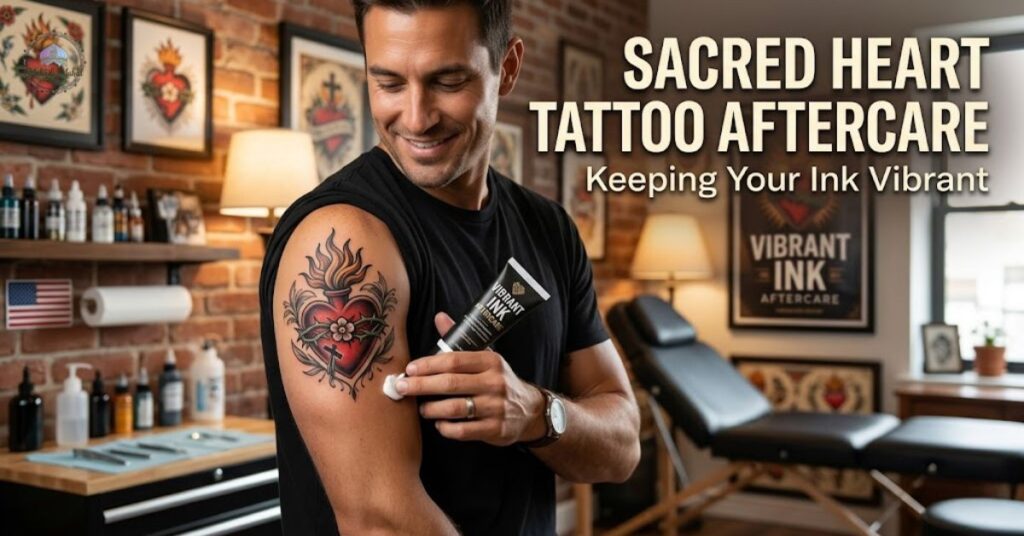
Long-term care matters just as much as the first two weeks. SPF protection applied over fully healed tattoos dramatically slows fading — especially critical for flaming heart tattoo pieces with bright reds, yellows, and oranges. Schedule touch-ups every few years to keep your sacred heart tattoo crisp, saturated, and visually sharp. Treat your tattoo like the long-term investment it genuinely is.
Quick Aftercare Checklist:
| Day Range | Care Action |
| Day 1–3 | Keep wrapped, gently wash 2x daily |
| Day 4–7 | Apply unscented lotion, avoid sun |
| Day 8–14 | Let it peel naturally, no picking |
| Week 3–4 | Tattoo looks dull — normal healing |
| Month 2–3 | Color settles, skin fully heals |
| Ongoing | SPF daily, touch-up as needed |
Editor’s Picks — Sacred Heart Tattoo Inspiration Gallery
These are the pieces that genuinely stopped the scroll. Each one demonstrates masterful execution across different styles, proving that a sacred heart tattoo in truly skilled hands becomes something far beyond religious art tattoo iconography. These are the favorite sacred heart tattoos that define what this design can achieve at its absolute highest level.
Browse artist portfolios on Instagram and TattooFilter for the most current and inspiring tattoo gallery inspiration available online today.
Editor’s Top Picks by Style:
| Style | Description |
| Best Traditional | Bold red heart, thick outlines, classic banner — timeless American power |
| Best Fine Line | Hairline strokes on the collarbone — almost ethereal in its delicacy |
| Best Blackwork | Full etching-style chest piece with ornamental framing — architectural and bold |
| Best Realism | Three-dimensional bleeding heart tattoo on forearm — photographic accuracy |
| Best Geometric | Sacred geometry mandala surrounding a minimalist heart — modern and spiritual |
| Best Neo Traditional | Rich color, painterly shading, floral additions — beautiful and complex |
Frequently Asked Questions About Sacred Heart Tattoos
How much does a sacred heart tattoo cost?
A small sacred heart tattoo starts around $100–$200 at most reputable American studios. Medium-sized pieces with real detail run $300–$600. Large, complex realism or sleeve work can easily exceed $1,000–$2,500 depending on artist experience, studio location, and total session time. Always tip your artist. Good tattooing is skilled labor and it deserves proper recognition and compensation.
Is a sacred heart tattoo painful?
Pain depends entirely on placement. Chest, ribcage, and hand placements rank highest on the discomfort scale. Forearm and upper arm placements sit at the much lower end. Most people describe the sensation as a consistent scratching or light burning feeling that’s absolutely manageable. The result is worth every uncomfortable minute. Thousands of people sit through it every single day across America.
What size should a sacred heart tattoo be?
Size must match both placement and detail level. Fine line tattoo designs work beautifully at 2–3 inches without losing clarity. Traditional tattoo designs and realism styles need at least 4–6 inches to hold proper detail over time without the lines bleeding together. Always follow your artist’s sizing recommendation — they understand how heart tattoo designs age on skin far better than any online guide can tell you.
Is it disrespectful to get a sacred heart tattoo?
For most practicing Catholics, a sacred heart tattoo is considered an act of personal devotion rather than disrespect. Non-religious wearers occasionally face questions about cultural sensitivity — but the symbol has a long, documented history of secular appreciation within tattoo culture. Wear it with genuine awareness of its origins and honest respect for its sacred heart meaning. That intention makes all the difference.